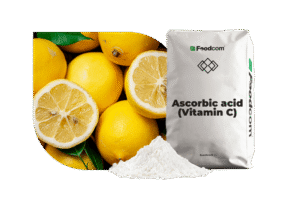



Advances in modern production technologies are leading to new and increasingly sophisticated applications for substances that have been known for years. One such compound is ascorbic acid, commonly associated with vitamin C, which plays a significant role not only in human nutrition but also in the food, cosmetics, and feed industries. Its versatility stems primarily from its chemical properties, which translate into a wide range of technological functions.
What is ascorbic acid and what are its properties?
Ascorbic acid is an organic chemical compound belonging to the group of water-soluble vitamins. In living organisms, it acts as a powerful antioxidant, protecting cells from the effects of free radicals. Its reducing properties allow it to participate in many biochemical processes, including collagen synthesis, iron metabolism, and immune system function.
From an industrial perspective, its technological properties are particularly significant. The substance demonstrates the ability to:
- inhibit oxidation processes,
- stabilize product color,
- improve the shelf life of raw materials,
- supporting chemical reactions as a reducing agent.
It is precisely these properties that make ascorbic acid a key functional raw material used across many sectors.

How is vitamin C produced on an industrial scale?
Vitamin C production is primarily carried out using biotechnological methods that combine fermentation and chemical processes. The most commonly used starting material is glucose, which is converted in stages into ascorbic acid through the action of microorganisms and controlled chemical reactions. This process yields a product of high purity and consistent quality parameters, which is crucial for industrial applications. Properly controlled production conditions allow the final product’s properties to be tailored to the requirements of various industries.
Ascorbic acid – applications in the food industry
One of the most important areas of vitamin C application is the food industry. Ascorbic acid serves here as a food additive, designated as E300. Its main function is to protect products from oxidation, which results in longer shelf life and better quality. In practice, it is used, among other things, in:
- fruit and vegetable preserves,
- beverages and juices,
- baked goods,
- meat products.
In baking, it improves the dough’s structure and baking properties, while in meat products it helps maintain the proper color and reduces spoilage. In this way, manufacturers can achieve a more stable final product without having to use more invasive additives.
Vitamin C – role in supplementation and human nutrition
The human body cannot synthesize vitamin C on its own, so a regular supply is necessary – either through diet or in the form of supplements. In the context of human nutrition, vitamin C plays a much broader role than simply supporting immunity. It is one of the most important components involved in basic metabolic processes that affect the functioning of the entire body. Its action stems primarily from its strong antioxidant properties, thanks to which it neutralizes free radicals and reduces oxidative stress responsible for cell damage.
One of the most important aspects of vitamin C’s action is its role in collagen synthesis – a protein that serves as the primary building block of skin, blood vessels, bones, and connective tissue. A deficiency leads to a weakening of these tissues’ structure, which results in, among other things, poorer tissue regeneration, increased susceptibility to injuries, and skin problems.
Ascorbic acid also plays a significant role in iron absorption, particularly in the non-heme form found in plant-based foods. By reducing iron ions, it increases iron bioavailability, which is crucial for preventing deficiencies, especially in individuals following a plant-based diet. Additionally, it participates in the synthesis of certain neurotransmitters, indirectly influencing the functioning of the nervous system.
The use of ascorbic acid in the cosmetics industry
In the cosmetics sector, vitamin C is a valuable active ingredient with a broad spectrum of action. Its antioxidant properties and ability to support collagen synthesis make it a popular choice in skin care products. In practice, it is used in:
- brightening serums and anti-aging creams,
- skin-brightening formulations,
- products that protect against harmful environmental factors.
As one of the key cosmetic ingredients, it improves skin condition, supports its regeneration, and helps reduce the effects of free radicals. Stability of the form and proper formulation are essential in this case, as vitamin C is sensitive to light and oxygen.

Use in feed production and animal nutrition
A less obvious but significant area of application for vitamin C is the feed industry. Ascorbic acid is sometimes added to animal feed, particularly in stressful situations or in intensive farming, where it supports the body’s immunity.
Its applications include, among others:
- poultry and swine feed,
- feed for fish and aquaculture animals,
- supplementation during periods of increased demand.
Vitamin C improves animal health, supports their development, and reduces the negative effects of environmental stress. As a result, this also translates into production efficiency.
The importance of raw material quality in industrial applications
With such a wide range of applications, product quality and consistency are fundamental. Chemical raw materials used in production must meet specific standards that guarantee safety and efficacy.
The FDCM platform offers solutions tailored to various industrial sectors, supplying raw materials with controlled parameters that can be used in the production of food, cosmetics, and animal feed.
Ascorbic acid as an element of modern production
The importance of vitamin C in industry is not limited solely to its biological functions. It is, above all, a versatile technological ingredient used in many production processes. Its antioxidant, stabilizing, and quality-enhancing properties make it one of the most important raw materials used across various industries.
With technological advancements and growing market demands, the role of ascorbic acid will continue to expand. As an ingredient that combines nutritional and technological functions, it is a key component of modern formulations, meeting the needs of both manufacturers and consumers.