
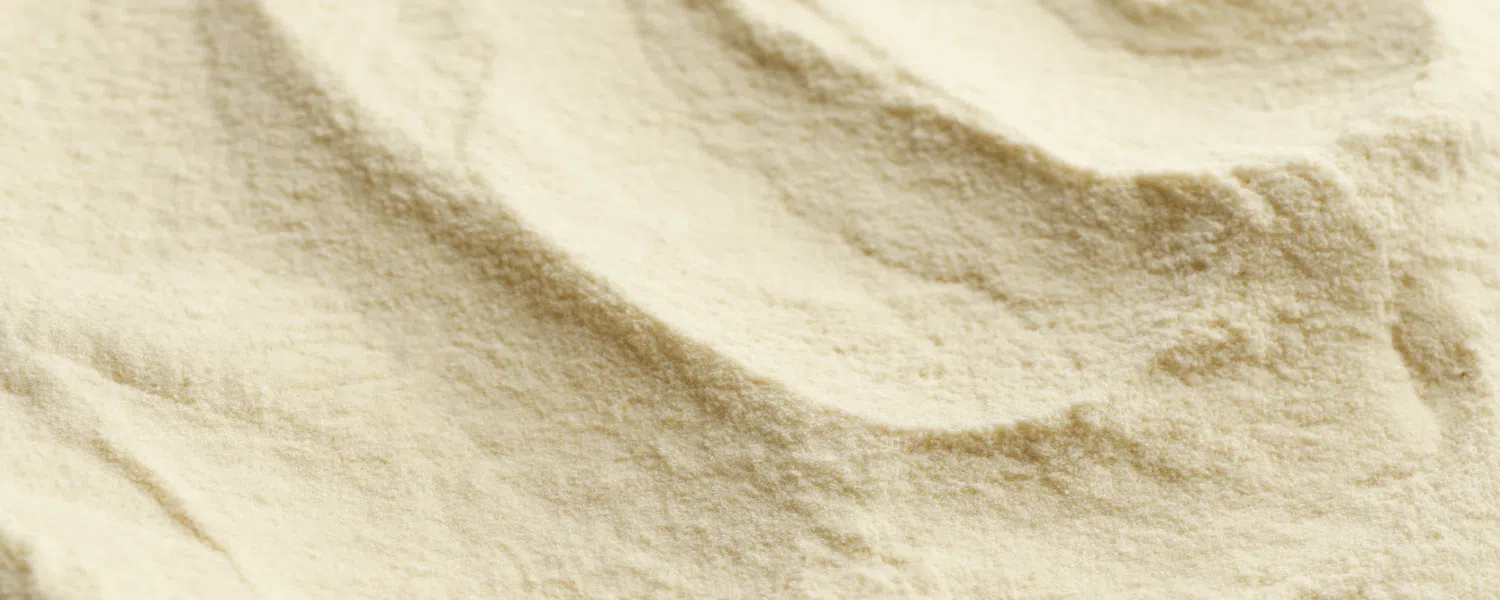
Natural hydrocolloids are increasingly used in the food industry and in modern technological processes, where they play a key role in determining product texture, stability, and quality. Among the most popular are xanthan gum and guar gum, which are often compared and even used interchangeably. Although they share many characteristics, the differences between them are significant and influence their practical applications.
What are hydrocolloids and why are they so important?
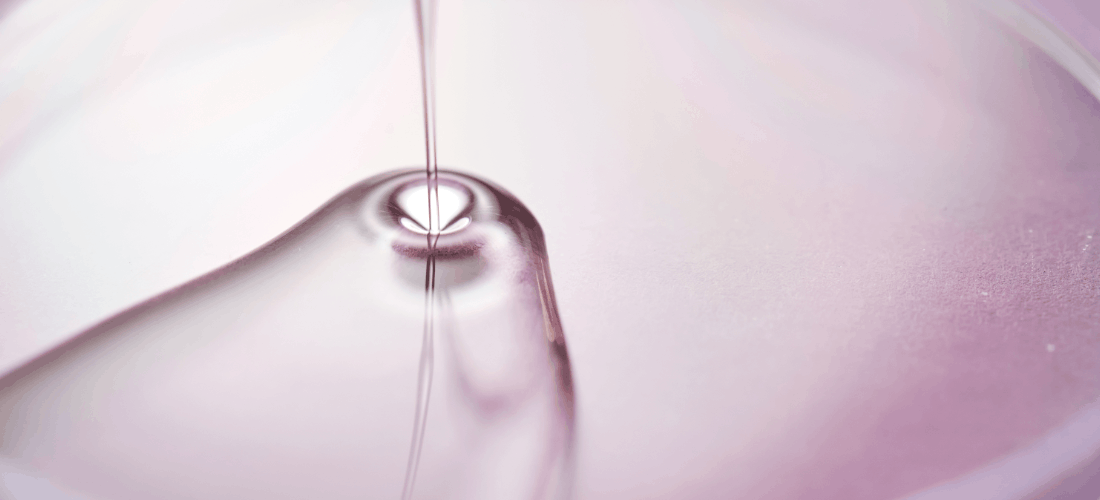
Both xanthan gum and guar gum belong to the group of hydrocolloids, i.e., macromolecular polysaccharides that form viscous solutions or gels when in contact with water. This group of compounds also includes alginates, pectins, and agar. The chemical structure of these substances, consisting of long sugar chains, allows them to bind large amounts of water, and thus modify the physicochemical properties of the solutions and products in which they are used.
Mechanism of action of hydrocolloids
Hydrocolloids primarily function through three key mechanisms, which account for their widespread use in the food industry and other sectors. It is thanks to these mechanisms that it is possible to precisely control the texture, stability, and rheological properties of products, regardless of processing conditions and formulation composition.
- Thickening and increasing viscosity.
Long polysaccharide chains form three-dimensional networks in aqueous solutions, which impede the free flow of the liquid, thereby increasing its viscosity. In the case of xanthan gum, these networks are highly stable over a wide range of temperatures and pH levels, whereas guar gum reacts more rapidly with water, resulting in immediate thickening. - Gel formation and emulsion stabilization.
Hydrocolloids can bind to each other or to other product ingredients (e.g., proteins or fats), forming gel structures that stabilize emulsions and prevent ingredient sedimentation, thereby imparting a uniform texture and attractive appearance. - Control of sensory properties.
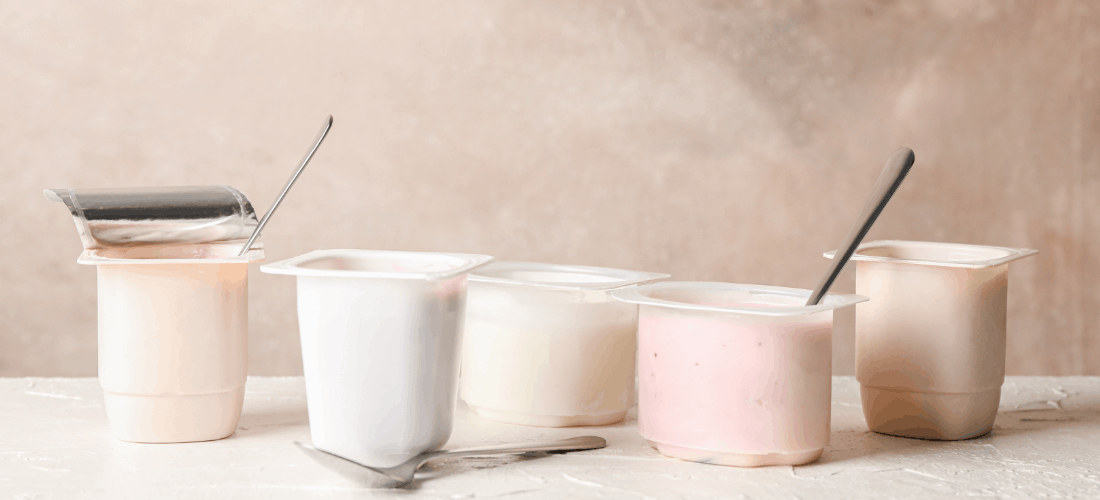
By creating the right structure, hydrocolloids enhance sensory characteristics, such as the smoothness of sauces, the creaminess of yogurt, or the springiness of gluten-free dough. Unlike many other thickeners, their use does not alter the taste or smell of the product.
Xanthan gum vs. guar gum – technological differences
The most important difference between these substances stems from their origin:
- xanthan is produced by the fermentation of sugars by the bacterium Xanthomonas campestris,
- guar gum is obtained from the seeds of the Cyamopsis tetragonolobus plant
This distinction is of great technological importance because it affects the chemical structure, rheological properties, and stability under various environmental conditions.
Physicochemical properties and key differences
The properties of xanthan gum make it one of the most versatile functional additives. Most importantly:
- it forms very stable solutions even at low concentrations,
- it exhibits high resistance to changes in temperature, pH, and the presence of salts,
- it exhibits pseudoplastic behavior – its viscosity decreases during mixing and increases at rest,
- it prevents particle sedimentation and stabilizes emulsions.
Xanthan gum is therefore particularly valuable in products requiring shelf stability and resistance to harsh processing conditions.
Guar gum also functions as a thickener and stabilizer, but its properties are slightly different:
- it binds water very well and rapidly increases the viscosity of the solution,
- its viscosity is more dependent on the composition of the environment (e.g., salts or sugars),
- it easily forms gels and improves product texture,
- it acts as dietary fiber and may have a beneficial effect on the digestive system.
Compared to xanthan gum, it is less resistant to extreme processing conditions, but often provides a more “natural” texture.
Applications in the food industry
Both substances are widely used in the food industry, but their functions vary depending on the product. Xanthan gum is commonly used in:
- sauces, dressings, and ketchups – it ensures uniformity and prevents separation,
- gluten-free products – it improves dough elasticity and prevents crumbling,
- beverages and soups – it keeps ingredients in suspension,
- low-fat products – it mimics the properties of fat.
Its major advantage is its stability during processes such as pasteurization, freezing, or pH changes.
Guar gum, on the other hand, is used in:
- yogurts, dairy desserts, and ice cream,
- dietary products – as a source of fiber and a satiety-enhancing agent,
- sauces and creams – where rapid thickening is needed,
- dietary supplements and medications – as a filler and a substance that delays release.
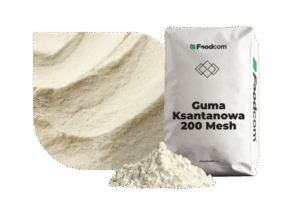
You can find both products on the FDCM sales platform.
Synergy – why are they often used together?
An interesting aspect is that xanthan gum and guar gum can work synergistically. Their combination significantly increases the viscosity of the solution and improves gelling properties.
In practice, this means that manufacturers often use them together to achieve optimal product texture – especially in advanced food formulations.
Both gums are also widely used outside the food industry:
- in cosmetics – as emulsion stabilizers and thickeners,
- in pharmaceuticals – as excipients in tablets,
- in industry – e.g., in technological processes requiring viscosity control.
Xanthan gum is distinguished by its particularly high chemical resistance, which makes it suitable even for use in the drilling industry.
Which one should you choose?
There is no single universal answer, as the choice depends on the application. If stability, temperature resistance, and pH resistance are important, xanthan gum is the better choice. However, if rapid thickening and fiber-like properties are needed, guar gum will work better. In practice, both substances have been thoroughly tested and are extremely functional. Their properties make them the foundation of modern food technology – from gluten-free products to advanced industrial formulations.