


Joint health is an issue that becomes important for most people over time. Regardless of lifestyle – whether athletic, sedentary or related to ageing – cartilage and connective tissues gradually lose their elasticity. For this reason, supplements that support the condition of the musculoskeletal system are increasingly being used. Among the most popular ingredients are collagen and MSM, or methylsulfonylmethane. Which one works better, and in what situations should they be used together?
Collagen – the protein of youth
Collagen is the basic structural protein in the human body. It accounts for about 30% of all proteins and builds not only skin, hair and nails, but also tendons, ligaments and joint cartilage. It makes joints flexible and movements smooth and painless. Unfortunately, with age, the natural production of collagen decreases, which manifests itself in stiffness, cracking joints and increased susceptibility to injury.
Collagen supplementation aims to compensate for these deficiencies. Various forms are available on the market – hydrolysates, fish, beef or poultry collagen. They differ primarily in their degree of absorption and amino acid profile, but their common task is to provide building material for cartilage. Studies indicate that regular collagen intake can reduce pain in people with osteoarthritis and improve recovery in athletes.
MSM – a natural source of sulphur
The second ingredient often recommended for joints is MSM, or methylsulfonylmethane. It is an organic sulphur compound, the presence of which in the diet plays a huge role in regeneration processes. Many people wonder, what is organic sulphur? It is a form of sulphur that occurs naturally in plants, fruits and vegetables, which, unlike inorganic compounds, is well absorbed by the body.
MSM supports the synthesis of collagen and keratin, thus affecting not only the joints, but also the skin, hair and nails. What is more, it has anti-inflammatory properties – it reduces swelling and relieves stiffness. For this reason, it is often recommended for people struggling with chronic rheumatic conditions, as well as athletes after intense exercise.

Collagen and MSM – similarities and differences
Although collagen and MSM affect the joints in slightly different ways, their mechanisms are complementary in a sense. Collagen is a direct building block of cartilage and connective tissues, while MSM provides the sulphur needed for collagen synthesis and reduces inflammation. It can therefore be said that MSM creates the conditions for collagen to work better.
The difference also lies in the expected effects. Collagen has a long-term effect – its supplementation requires patience, because rebuilding structures takes time. MSM, on the other hand, often brings faster relief from pain and inflammation. No wonder many experts recommend combining them.
What to consider when choosing MSM?
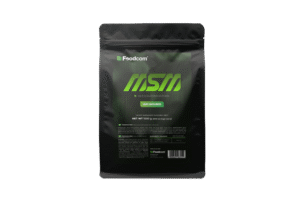
There are many MSM products available on the market, but it is worth paying attention to the quality and purity of the product. Foodcom MSM is distinguished by its high bioavailability and pharmaceutical purity. In this way, the body effectively utilises the organic sulphur it contains, which supports the natural regeneration processes of joints, skin and hair.
The FDCM.eu wholesaler specialises in supplying high-quality raw materials for various industries and supplementation. In the case of MSM, proper standardisation and purity are important, which is why choosing a reliable supplier is crucial for the effects of use.
What to choose – collagen or MSM?
There is no clear-cut answer to this question, as both ingredients have different functions. If you want to rebuild cartilage and provide ‘building blocks’ for your joints, collagen is the natural choice. On the other hand, if your priority is to reduce inflammation and accelerate regeneration, MSM is the better option.
In practice, the best results are achieved by combining both substances. Collagen rebuilds tissue, while MSM improves its quality and promotes the production of new fibres. This synergistic effect makes supplementation more comprehensive.

Practical tips for supplementation
When using collagen and MSM, there are a few details to keep in mind that can increase the effectiveness of supplementation. Collagen is best taken in the morning or before bedtime, when the body initiates its regenerative processes. In addition, it is recommended to combine it with vitamin C, as it supports collagen fibre synthesis and improves absorption.
MSM can be taken at any time of the day, but for some people it is beneficial to take it in the morning as it can support vitality and reduce joint stiffness after the night.
The best supplements for joint health
Both collagen and MSM have proven benefits for joint health, but they differ in their mechanism of action. Collagen provides building material, while MSM reduces inflammation and supports collagen production. Physically active people, seniors and patients with rheumatic problems can use both ingredients at the same time for more complete support.
The choice of the right supplement therefore depends on individual needs – sometimes collagen alone is enough, in other situations MSM is more effective, and in many cases a combination of the two is the best solution.