Description

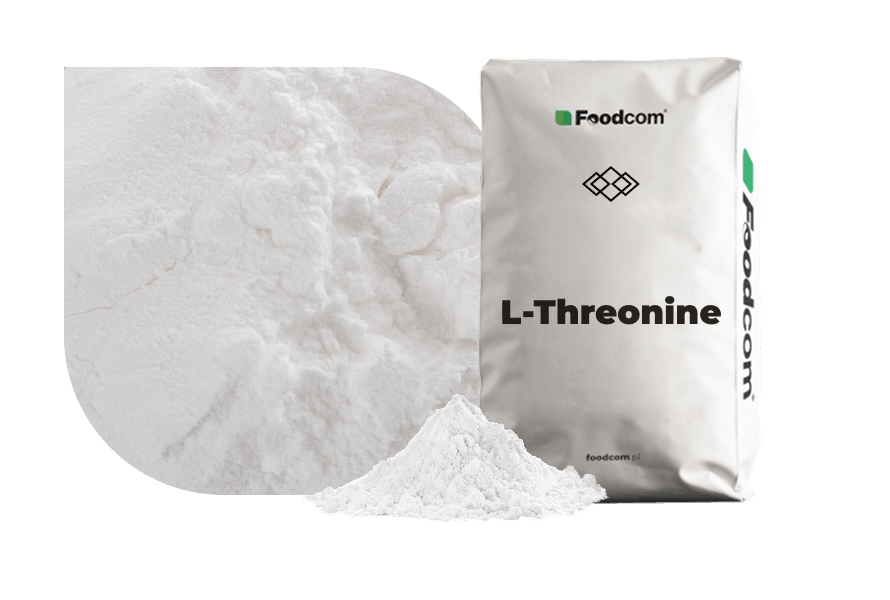
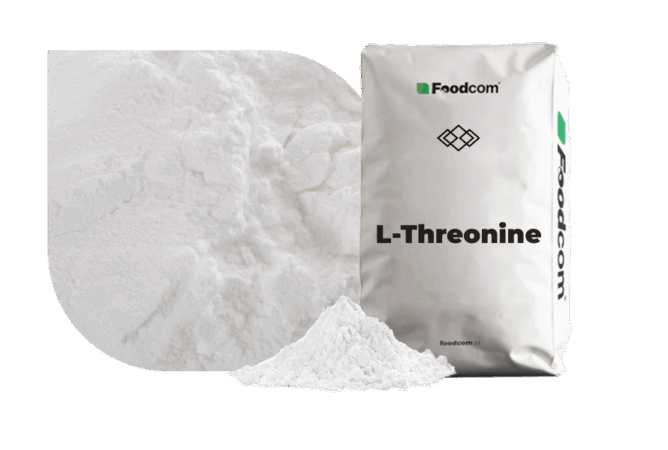
L-threonine feed grade 98.5% is an essential amino acid in the form of a white or light brown powder or granules. It is a high-purity substance intended for use as a feed ingredient. With a minimum threonine content of 98.5% in dry matter, the product is characterized by high quality and stability in an industrial environment.

Technical aspects

The product is characterized by its pure composition, stable chemical parameters, and controlled heavy metal content.

Parameter Value
Appearance Powder or granules, white to light brown
Threonine content (dry matter) min 98.5%
Heavy metals (as Pb) max 10 ppm
Arsenic (as As) max 1 mg/kg
Residue on ignition max 0.5%
Loss on drying max 1%
pH 5–6
Specific rotation -26.00° to -29.00°

Application

Feed-grade threonine is used as a supplement in feed mixtures for farm animals. Thanks to its high content of this amino acid — at least 98.5% — the product allows for precise balancing of feed in terms of protein content, which has a direct impact on the growth rate, condition, and production efficiency of animals.
The amino acid threonine plays a particularly important role in the nutrition of pigs and poultry, i.e. monogastric animals, in which threonine deficiency can limit weight gain despite the presence of other nutrients. This additive improves the digestibility of nutrients and increases feed efficiency, which allows for reduced feed consumption while maintaining high breeding results.
L-threonine for feed is widely used in the production of complete feeds, concentrates, and premixes. Due to its powder or granule form and neutral chemical profile, this product mixes well with other feed ingredients, ensuring even distribution in the finished product.

Storage

The product should be stored in a cool, dry, and well-ventilated area. L-threonine feed must be protected from moisture, heat, and contamination to preserve its quality and effectiveness. When properly stored, the product has a shelf life of 2 years.

Package

The amino acid threonine is available in bulk packaging – both in smaller bags and in big bags. This form of packaging allows for convenient storage and transport in industrial conditions.