Description

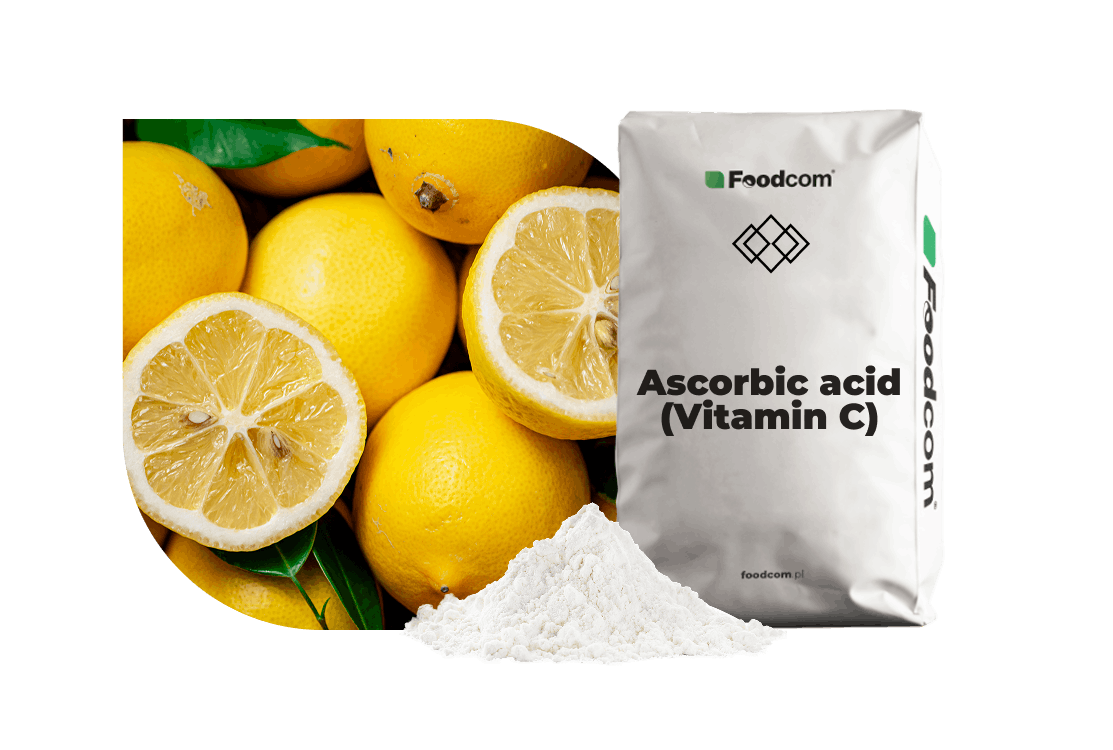
Vitamin C (L-ascorbic acid) occurs in reduced or oxidised form and is known for its high sensitivity to external factors, mainly light and heat. The product is in the form of white or almost white crystals or crystalline powder, with a uniform white-cream colour and a taste typical of vitamin C.

Thanks to its high purity (99–100.5%) and antioxidant properties, vitamin C is widely used in the food, pharmaceutical and supplement industries. It is a key ingredient in preparations that strengthen immunity and support the proper functioning of the body.

Technical aspects

Vitamin C has a uniform white-cream colour and occurs in the form of crystals or crystalline powder. It is highly soluble in water, forming clear solutions with a low pH (acidic). The product is stable when stored in a dry and cool place, away from light and moisture.

Parameter Value
Assay 99–100.5%
Melting point approx. 190 °C
pH (2% solution in water) 2.4–2.8
pH (5% solution in water) 2.1–2.6
Transparency of solution Clear
Colour of solution ≤ BY7
Loss on drying ≤ 0.4%
Copper (Cu) ≤ 5.00 ppm
Iron (Fe) ≤ 2.00 ppm
Lead (Pb) < 2.00 ppm
Cadmium (Cd) < 1 mg/kg
Mercury (Hg) < 1 mg/kg

Application

Vitamin C is widely used in dietary supplements and pharmaceutical preparations, where it supports immunity, reduces oxidative stress and participates in collagen synthesis.

Storage

Store in a dry, cool place, away from light. Protect from moisture and high temperatures.