Description

L-lysine feed is an exogenous amino acid, i.e. it is not produced naturally by animal organisms and must therefore be supplied from external sources, most often in the form of a feed additive.

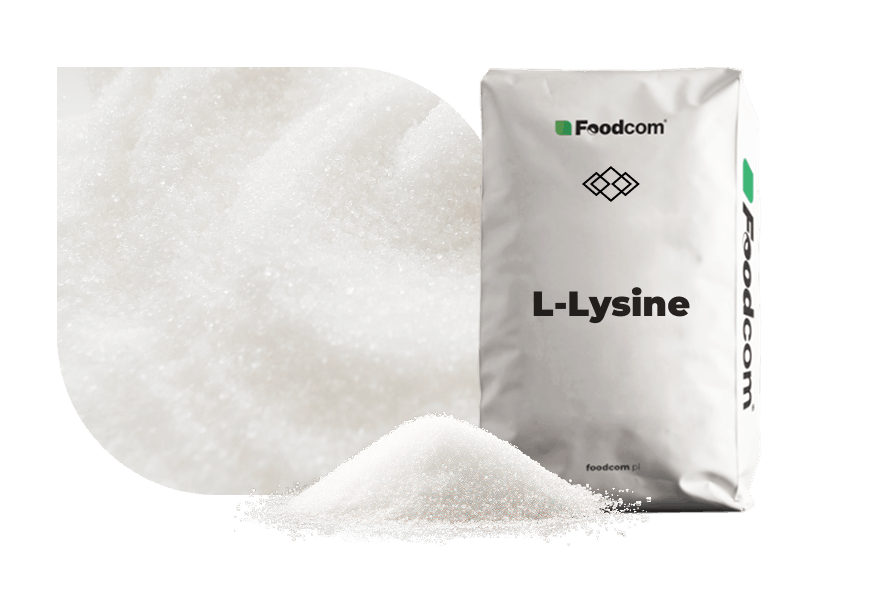
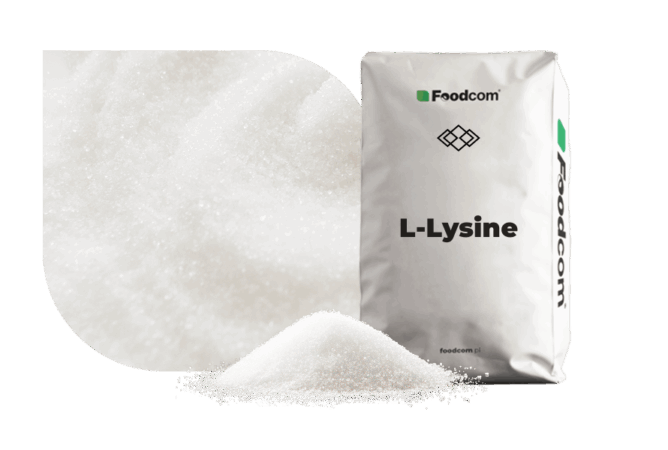
This product is available as a free-flowing powder or granules ranging in colour from white to light brown. It is obtained synthetically and is characterised by high purity, stable physicochemical properties and a lysine content of at least 78%. Thanks to these parameters, it is the most important ingredient in the nutrition of monogastric animals such as pigs and poultry.

Technical aspects

L-lysine used in animal feed is characterised by high purity and stable physicochemical parameters.

Parameter Value
Appearance Powder or granules
Colour White to nutty
Lysine HCl content max. 4.0%
Lysine content ≥78%
Loss in dry weight ≤1%
Residue after combustion ≤0.3%
Ammonium salts ≤0.04%
pH 5.0 – 6.5
Specific rotation [α]D20°C +18.0° to +21.5°
Lead (Pb) ≤30 mg/kg
Arsenic (As) ≤20 mg/kg


Application

The amino acid L-lysine is used as a feed additive in livestock nutrition. It supplements lysine deficiencies in feed mixtures and improves nutritional efficiency, supporting muscle growth and overall animal development.

The product is mainly used in the nutrition of pigs, poultry and other monogastric animals, for which lysine is one of the most important growth-limiting amino acids. The use of l-lysine makes it possible to optimise feed formulations in terms of biological protein value, which translates into better nutrient utilisation and improved production performance.

Storage

The product should be stored in a cool (0–30°C), dry place with a maximum humidity of 70% and good ventilation. L-lysine feed should be kept in tightly closed containers, away from light and sources of fire to prevent moisture absorption.

Package

Feed lysine is available in bulk packaging, both in small 25 kg bags and in big bags, allowing the product to be adapted to the needs of any type of feed production.