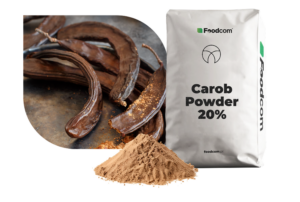




Carob is a plant ingredient that is increasingly replacing cocoa, not only because of its price, but also because of its numerous health and functional properties. Its natural sweetness, lack of caffeine, and cocoa flavor make it an attractive alternative in products for children and people on a diet. Let’s take a closer look at what carob is, what its benefits are, and why it is worth considering its commercial use, especially in the context of growing consumer expectations for healthy and organic ingredients.
Carob – what is it and what is it used for?
Carob, also known as locust bean, is a natural ingredient with growing market importance. It is a plant product obtained from the pods of the carob tree (Ceratonia siliqua), which grows mainly in the Mediterranean region.
Carob flour, or carob powder, is becoming increasingly popular in the food industry as an alternative to cocoa. In an industrial context, carob not only has attractive sensory properties, but also allows for optimized production costs. Fluctuations in cocoa prices are prompting many manufacturers and consumers to turn to this raw material.
Properties of carob
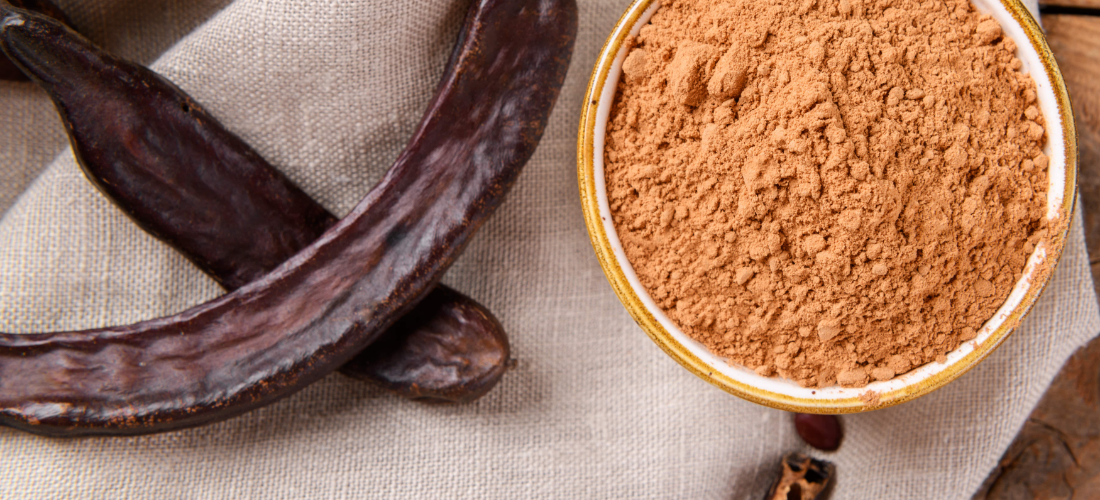
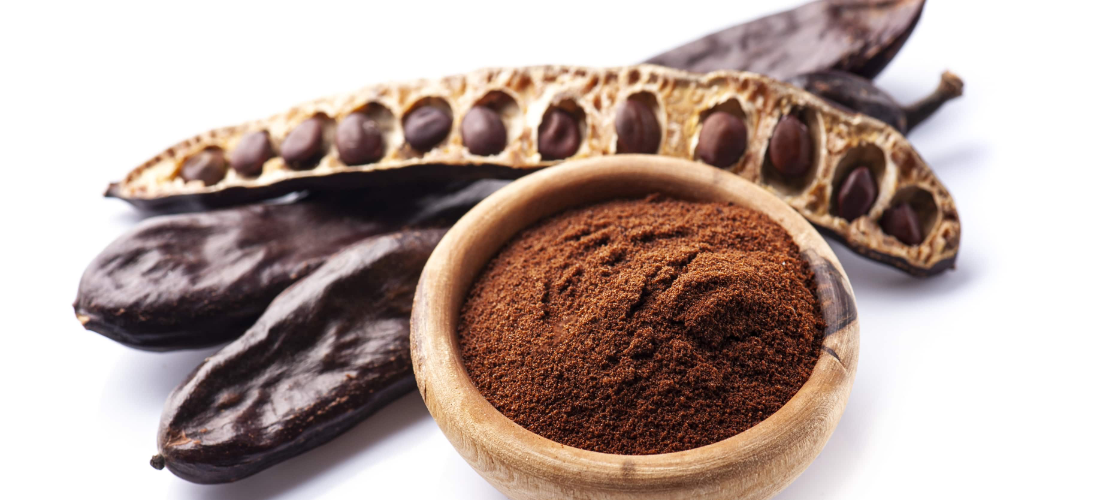
Carob usually comes in the form of a fine red-brown powder. It resembles cocoa in appearance, smell, and taste. Carob powder is made by cleaning, roasting, and grinding the pods of the carob tree.
Carob has the following properties:
- no caffeine or theobromine – unlike cocoa, it does not contain any stimulants, making it suitable for children and people with high blood pressure;
- natural sweetness – carob contains natural sugars (mainly sucrose), so it does not require additional sweetening in many applications;
- low glycemic index – this raw material is therefore suitable for people on a low-sugar diet or diabetics;
- very low fat content – thanks to which it is used in dietetic and health-promoting products;
- high fiber and tannin content – supports digestive processes and may also have a positive effect on lipid metabolism (e.g., carob powder 60% contains as much as 60% fiber);
- hypoallergenic – does not cause allergies;
- technological stability – carob behaves well at high temperatures, and its structure affects the consistency and color of the final product.
The use of carob in the food industry
Carob powder 45% or 60% is used as an ingredient in a wide range of products, from conventional baked goods to functional foods. Examples of applications for this raw material include:
- chocolate and chocolate-like creams – e.g., caffeine-free, vegan alternatives to traditional products;
- breakfast cereals and cereal bars – as a natural colouring and sweetener;
- plant-based drinks, including those for children – “cocoa” drinks without stimulants;
- baked goods and desserts – biscuits, muffins, cakes, ice cream;
- functional and organic foods – carob is often certified organic, e.g. organic carob 45%.
Carob and cocoa
Although carob is sometimes referred to as “healthier cocoa,” the two ingredients differ significantly in both composition and properties. Cocoa has an intense aroma and contains stimulating compounds. Carob, on the other hand, has a milder taste and color, but is sweeter and more stable. Cocoa contains more fat – carob often has less than 1.5%, while alkalized cocoa powder has 10-12%. Carob, on the other hand, contains more fiber.
When to choose carob instead of cocoa? In particular, when we want a product that is caffeine-free and has no added sugar, e.g. for children, diabetics or people on a diet. It is also a good choice when we want to reduce costs or the carbon footprint of production, as carob cultivation requires fewer resources than cocoa.
In practice, carob and cocoa are often combined to achieve a balance between taste and functional properties. A similar alternative to natural cocoa is alkalized cocoa, which has a milder taste and better technological properties. You can read more here: What is alkalized cocoa?
Carob powder and market trends
Current trends in the food market focus on ecology, the absence of chemical additives (clean label) and low sugar content. These trends mean that carob meets the needs of both consumers and producers. There is growing interest in natural, plant-based and hypoallergenic products, and carob meets all these expectations. In addition, products containing carob are often free from GMOs, gluten and milk allergens, making it a versatile ingredient suitable for a wide range of consumers.
Carob powder is an ingredient that combines technological properties with high market value. For food manufacturers, it is an excellent way to innovate and stand out in the health-conscious and functional food segment. Would you like to introduce carob to your product line? Check out the offer at FDCM.eu.