Description

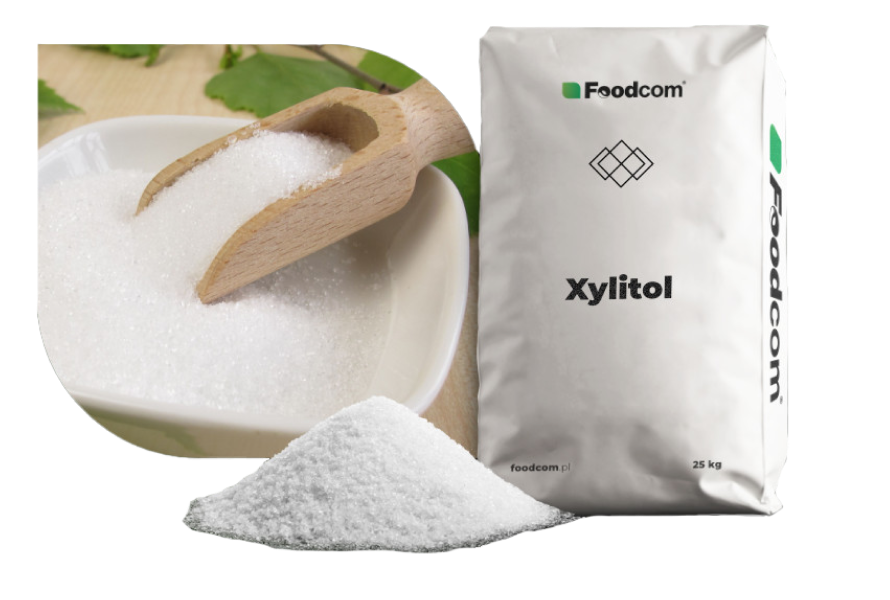
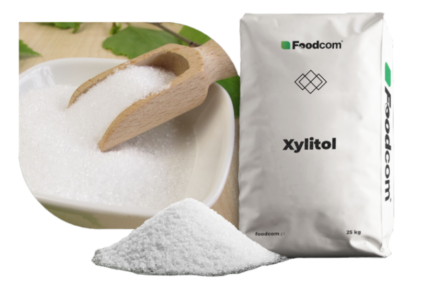
Birch sugar is a natural sugar alcohol obtained from plant materials such as birch wood or corn cobs. It is a white, crystalline powder with a sweet, slightly cooling taste and a neutral odour.

Xylitol is distinguished by its low glycaemic index and lower calorie content compared to sucrose. Thanks to its technological and taste properties, it is widely used in the production of functional foods and in recipes designed for people who care about oral health.

Technical aspects

The sweetener xylitol is odourless, has a sweet, slightly cooling taste and a free-flowing, crystalline structure. It is characterised by high purity, good solubility in water and stability over a wide temperature range.

Parameter Value
pH 5.0–7.0
Purity (calculated on dry weight) 98.5–101.0%
Other polyols – individually max. 0.5%
Other polyols – total max. 1.0%
Reducing sugars max. 0.2%
Moisture max. 0.5%
Ash max. 0.1%
Chlorides max. 40 mg/kg
Sulphates max. 50 mg/kg

Application

Xylitol is used in the food industry as a low-calorie sugar substitute in chewing gum, sweets, confectionery, desserts, beverages and baked goods. Thanks to its anti-caries properties, birch sugar is particularly popular in oral hygiene products such as toothpastes and mouthwashes.

The sweetener E967 is also used in dietary and functional recipes, including foods for diabetics, sugar-free and low-glycaemic products. It blends well with other sweeteners, enhancing their effect and improving the taste profile of products.

Storage

Xylitol should be stored at a temperature below 25°C, at a relative humidity below 65%, in its original, tightly closed packaging, away from moisture and strong odours.

Package

Birch sugar is available in bags or big bags, depending on the customer’s needs.