Description

Sodium Nitrate is an inorganic chemical compound, more specifically, a salt of nitric acid and sodium. Sodium Nitrate occurs in nature as the mineral nitronatrite. Industrially, it is produced by neutralizing nitric acid with either sodium carbonate, sodium bicarbonate, or sodium hydroxide. Sodium Nitrate is most commonly used in fertilizers, but also in food, where it is a preservative called E251.

Technical aspects

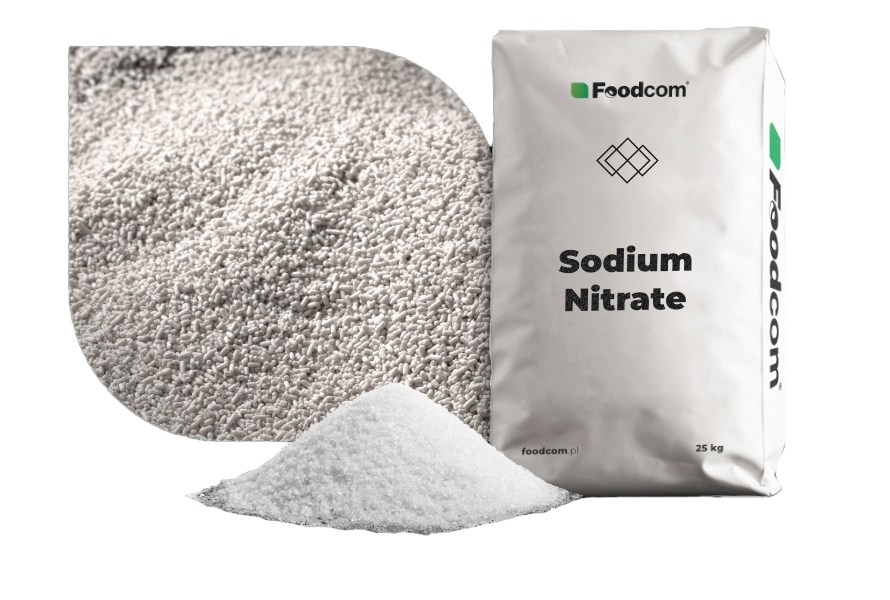
Sodium Nitrate is in the form of an odorless white granule. It is highly soluble in water and has strong hygroscopic and oxidizing properties. Sodium Nitrate is a preservative in food, which is converted to nitrite and in this form inhibits bacterial growth. Sodium Nitrate in its molten form, as well as its solutions mixed with potassium nitrate, has excellent thermal stability and high heat capacity, which makes it a valuable ingredient in explosive materials.

Application

Sodium Nitrate is mainly used in fertilizers as it is a water-soluble source of nitrogen for NPK fertilizers. Nitrogen stimulates plant growth and contributes to the development of strong leaves, stems and roots. In addition, it does not alter the pH of the soil. Thanks to its thermal stability, Sodium Nitrate is also widely used in explosives.

In food processing, Sodium Nitrate as E251 is commonly used as a preservative and color fixative in the meat production. Curing meat products with Sodium Nitrate prevents the growth of Clostridium botulinum, which is a type of bacteria that causes botulism. Additionally, during cheese-making, it is added to ripening cheeses to inhibit the growth of microorganisms like Clostridium tyrobutycurum.

Adhesives, sealants and solvents are also based on Sodium Nitrate, because it reduces their viscosity and increases solids. It is also used in the manufacture of paints and varnishes as rust inhibitor.

Storage

The shelf life of Sodium Nitrate is approximately two years.

Package

Foodcom supplies its Business Partners with Sodium Nitrate in 25 kg bags and Big Bags.

Sodium Nitrate

Shipping fee not included.

Minimal order
5 MT
Stock
On demand
Total:
Each:
Ask for a product
Order more

We offer a delivery option by prior arrangement. Contact the logistics department for an individual offer.

Ask for a sample

Customer support

Delivery

We ship orders across the EU to the address you provide. For individual offers or personal pickup from our warehouses, please contact our logistics team: +48 577 494 140

We also deliver samples, Foodcom Creatine/MSM, and other ready-to-use consumer products both within Poland and abroad.

Description

Sodium Nitrate is an inorganic chemical compound, more specifically, a salt of nitric acid and sodium. Sodium Nitrate occurs in nature as the mineral nitronatrite. Industrially, it is produced by neutralizing nitric acid with either sodium carbonate, sodium bicarbonate, or sodium hydroxide. Sodium Nitrate is most commonly used in fertilizers, but also in food, where it is a preservative called E251.

Technical aspects

Sodium Nitrate is in the form of an odorless white granule. It is highly soluble in water and has strong hygroscopic and oxidizing properties. Sodium Nitrate is a preservative in food, which is converted to nitrite and in this form inhibits bacterial growth. Sodium Nitrate in its molten form, as well as its solutions mixed with potassium nitrate, has excellent thermal stability and high heat capacity, which makes it a valuable ingredient in explosive materials.

Application

Sodium Nitrate is mainly used in fertilizers as it is a water-soluble source of nitrogen for NPK fertilizers. Nitrogen stimulates plant growth and contributes to the development of strong leaves, stems and roots. In addition, it does not alter the pH of the soil. Thanks to its thermal stability, Sodium Nitrate is also widely used in explosives.

In food processing, Sodium Nitrate as E251 is commonly used as a preservative and color fixative in the meat production. Curing meat products with Sodium Nitrate prevents the growth of Clostridium botulinum, which is a type of bacteria that causes botulism. Additionally, during cheese-making, it is added to ripening cheeses to inhibit the growth of microorganisms like Clostridium tyrobutycurum.

Adhesives, sealants and solvents are also based on Sodium Nitrate, because it reduces their viscosity and increases solids. It is also used in the manufacture of paints and varnishes as rust inhibitor.

Storage

The shelf life of Sodium Nitrate is approximately two years.

Package

Foodcom supplies its Business Partners with Sodium Nitrate in 25 kg bags and Big Bags.

111

Contact

Reach out to us!

Contact us by the contact form, and get a direct response to your question within four business hours!

Interested in selling your products on our marketplace
Peberdy William
Need a new supplier for your production?
Grammont Stevenson
Interested in a product not listed on the website?

Sign up for our newsletter to learn more about our products