Beschrijving

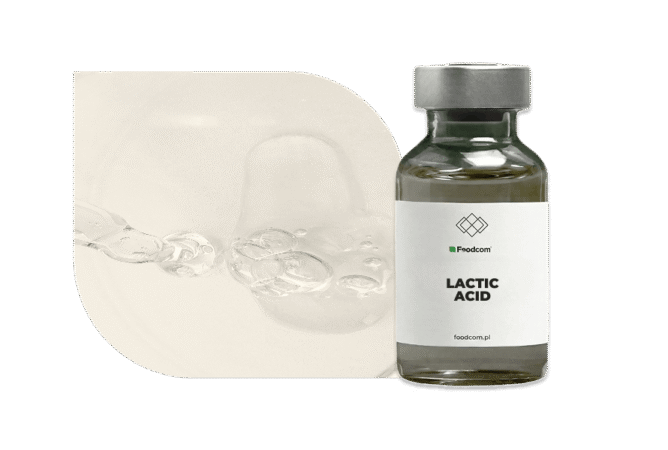
Melkzuur is een organisch zuur dat wordt geleverd als een heldere, stroperige vloeistof met een uitgesproken zure smaak. Het product is kleurloos tot lichtgeel en is geurloos of heeft slechts een vage, karakteristieke geur. Vanwege zijn fysisch-chemische eigenschappen en hoge stabiliteit wordt melkzuur op grote schaal gebruikt in de voedingsmiddelenindustrie, de chemische industrie en diverse industriële toepassingen.

Technische aspecten

Het zuur wordt gekenmerkt door een goede oplosbaarheid, een lage corrosieve werking op metalen en het feit dat het niet brandbaar is. Het wordt vaak gebruikt als zuurgraadregelaar, verwerkingshulpstof en tussenproduct in diverse technologische processen.

Parameter Waarde
Uiterlijk Transparante, stroperige vloeistof
Kleur Kleurloos of lichtgeel
Geur Reukloos of licht karakteristiek
pH < 1
Kookpunt 122 °C (1,85–2,0 kPa, 100 %)
Smeltpunt 53 °C (100 %)
Ontvlambaarheid Niet brandbaar
Soortelijk gewicht 1,20 – 1,21
Viscositeit 0,0369 Pa·s (25 °C, 86,6% oplossing)
Oplosbaarheid Mengbaar met water en alcohol
Corrosiesnelheid van metaal Laag – 1,14 mm/jaar
Houdbaarheid 3 jaar

Toepassing

Melkzuur wordt op grote schaal gebruikt in diverse industriële sectoren, waaronder:

  • de voedingsmiddelenindustrie als zuurteregelaar en verwerkingshulpstof,
  • de chemische industrie als tussenproduct en functioneel additief,
  • industriële formuleringen waarbij de pH moet worden aangepast,
  • op fermentatie gebaseerde en biochemische processen,
  • technische toepassingen waarbij een gecontroleerde zuurgraad vereist is.

Opslag

Melkzuur moet in de originele verpakking of in goed afgesloten verpakkingen worden bewaard. Het product moet onder de juiste opslagomstandigheden worden bewaard om de kwaliteit en stabiliteit gedurende de gehele houdbaarheidstermijn te waarborgen.

Verpakking

Product dat in IBC-containers wordt vervoerd.

Veelgestelde vragen

What is lactic acid and how is it produced?
Lactic acid is an organic acid naturally formed during the fermentation of carbohydrates. In industrial production, it is typically obtained through the controlled fermentation of sugars derived from corn, sugar beet, or sugarcane. It is widely used in food, pharmaceutical, cosmetic, and industrial applications.
What are the main applications of lactic acid?
Lactic acid is primarily used as an acidity regulator, preservative, and pH stabilizer in the food industry (E270). It is also applied in cosmetics (for exfoliation and pH control), pharmaceuticals, animal nutrition, and as a raw material for producing biodegradable plastics such as PLA (polylactic acid).
Is lactic acid safe for food use?
Yes. Lactic acid (E270) is approved for use in food products worldwide and is considered safe when used according to regulatory guidelines. It occurs naturally in many fermented foods such as yogurt, pickles, and sourdough bread.
What is the difference between food-grade and technical-grade lactic acid?
Food-grade lactic acid meets strict purity and safety standards for use in food and beverage applications. Technical-grade lactic acid is typically used in industrial processes, cleaning products, or biodegradable material production, where food safety certification is not required.