Description

Caffeine is an organic chemical compound that belongs to the purine alkaloids and occurs naturally in coffee beans and many other plants. It can be obtained not only by extraction from plant seeds, but also synthetically – by chemical synthesis of urea, which is then combined with either methyl chloride or ethyl acetate. Synthetically produced caffeine has a much higher concentration and is absorbed more quickly by the body.

Technical aspects

The structure of caffeine contains carbon atoms and nitrogen atoms linked in a characteristic way. In solid form, caffeine is a white, water-soluble powder with a bitter taste. Caffeine has a stimulating effect, reduces fatigue and aids concentration. It also has a diuretic effect.

Application

Caffeine is found primarily in beverages such as coffee, tea, yerba mate, and cocoa. It is also an ingredient in energy drinks. As an ingredient in food products, Caffeine has a stimulating effect, reduces the feeling of fatigue and improves concentration and attention.
In the pharmaceutical industry, Caffeine is used in the production of painkillers, diuretics, supplements for athletes or drugs recommended for the treatment of bronchial asthma.
Since Caffeine improves blood circulation and lymphatic drainage, energizes the skin and keeps it firm, it is used in the cosmetics industry. It is found in anti-cellulite gels, as it is often used as an ingredient in their manufacture. It is also used in the production of shampoos for hair growth or eye creams.

Storage

The shelf life of Caffeine is 4 years. Store it in a tightly closed container and at room temperature.

Package

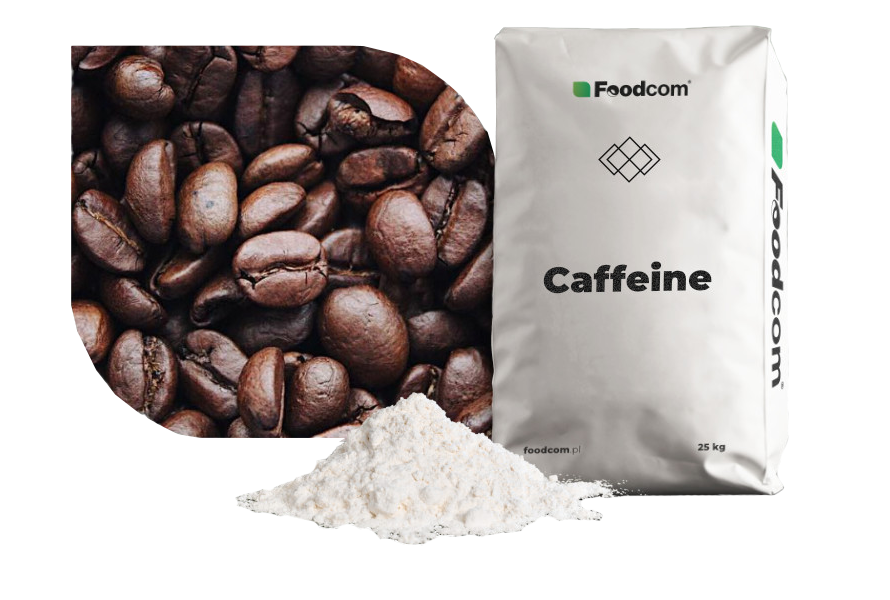
Foodcom S.A. offers its Business Partners Caffeine in 25 kg bags.

Sign up for our newsletter to learn more about our products

Sign up for our newsletter to learn more about our products

Contact

Reach out to us!

Contact us by the contact form, and get a direct response to your question within four business hours!

Explore now