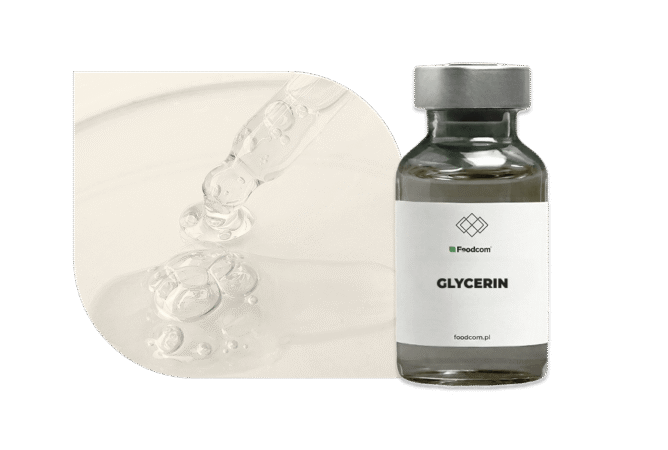
Description

Glycerin, also known as Glycerol, is a type of carbohydrate called a sugar alcohol or polyol. In terms of structure, it is the simplest trihydroxy alcohol. Natural sources of Glycerol are vegetable fats and animal fats. It can also be obtained synthetically by chlorinating propylene. Given that it is one of the most valuable and versatile chemicals in nature, Glycerol has many applications in various industries as a humectant, plasticizer, emollient, sweetener, bulking agent in low-fat foods and many others. As a food additive, it has the symbol E422.

Technical aspects

Glycerin is an odorless, colorless and viscous liquid with a sweet taste. It is fully miscible with water due to the presence of three hydroxyl groups. When exposed to humid air, Glycerol is highly hygroscopic, absorbing water as well as some gases. Glycerin in low concentrations has moisturizing and degreasing properties, while in high concentrations it has disinfecting and drying properties.

Application

In the food industry, Glycerin can be used as a solvent for flavors and food colors. In food, it is a humectant, an emulsifier and maintains the desired moisture of products, for example, it protects baked goods from drying out. As E422, it is a preservative because it binds water, thus limiting the growth of pathogenic microorganisms.

Glycerin is used in the cosmetics industry in the production of gels and in body care articles, including cosmetics and hair care products. It helps bring moisture to the surface of the skin – it absorbs water from the environment and retains it inside the skin. It is also an ingredient in glycerin soap, which is designed for delicate skin. Glycerin also has antibacterial and antiviral properties, so it is used to treat wounds and burns.

In the pharmaceutical industry, Glycerin is an ingredient in the heart drug nitroglycerin, which dilates blood vessels and is used for patients with coronary artery disease.

In addition, the use of Glycerin is widespread in the production of many modern protective coatings, such as car paints and exterior house paints. When used in tanning, it dries the skin due to its hygroscopic properties.

Storage

The shelf life of Glycerin is 24 months. The product can be stored at room temperature.

Package

The product is provided in IBC containers.

Glycerin

Minimal order
1 MT
Stock
On demand
Total:
Each:
Ask for a product
Order more

We offer a delivery option by prior arrangement. Contact the logistics department for an individual offer.

Customer support

Delivery

We ship orders across the EU to the address you provide. For individual offers or personal pickup from our warehouses, please contact our logistics team: +48 577 494 140

We also deliver samples, Foodcom Creatine/MSM, and other ready-to-use consumer products both within Poland and abroad.

Description

Glycerin, also known as Glycerol, is a type of carbohydrate called a sugar alcohol or polyol. In terms of structure, it is the simplest trihydroxy alcohol. Natural sources of Glycerol are vegetable fats and animal fats. It can also be obtained synthetically by chlorinating propylene. Given that it is one of the most valuable and versatile chemicals in nature, Glycerol has many applications in various industries as a humectant, plasticizer, emollient, sweetener, bulking agent in low-fat foods and many others. As a food additive, it has the symbol E422.

Technical aspects

Glycerin is an odorless, colorless and viscous liquid with a sweet taste. It is fully miscible with water due to the presence of three hydroxyl groups. When exposed to humid air, Glycerol is highly hygroscopic, absorbing water as well as some gases. Glycerin in low concentrations has moisturizing and degreasing properties, while in high concentrations it has disinfecting and drying properties.

Application

In the food industry, Glycerin can be used as a solvent for flavors and food colors. In food, it is a humectant, an emulsifier and maintains the desired moisture of products, for example, it protects baked goods from drying out. As E422, it is a preservative because it binds water, thus limiting the growth of pathogenic microorganisms.

Glycerin is used in the cosmetics industry in the production of gels and in body care articles, including cosmetics and hair care products. It helps bring moisture to the surface of the skin – it absorbs water from the environment and retains it inside the skin. It is also an ingredient in glycerin soap, which is designed for delicate skin. Glycerin also has antibacterial and antiviral properties, so it is used to treat wounds and burns.

In the pharmaceutical industry, Glycerin is an ingredient in the heart drug nitroglycerin, which dilates blood vessels and is used for patients with coronary artery disease.

In addition, the use of Glycerin is widespread in the production of many modern protective coatings, such as car paints and exterior house paints. When used in tanning, it dries the skin due to its hygroscopic properties.

Storage

The shelf life of Glycerin is 24 months. The product can be stored at room temperature.

Package

The product is provided in IBC containers.

Frequently Asked Questions

What is the difference between vegetable and synthetic glycerin?
Vegetable glycerin is derived from plant oils such as palm, soybean, or rapeseed oil and is commonly used in food, cosmetics, and pharmaceuticals. Synthetic glycerin is produced from petrochemical sources and is typically used in industrial applications. For food and personal care products, vegetable-origin glycerin is generally preferred.
What are the key properties of glycerin?
Glycerin is colorless, odorless, hygroscopic (attracts moisture), and highly soluble in water and alcohol. Its humectant and stabilizing properties make it an essential ingredient in products that require moisture retention, texture improvement, and extended shelf life.
Is glycerin safe for food and pharmaceutical use?
Yes. Food-grade glycerin (E422) is approved for use in food and pharmaceutical products and complies with strict purity standards. It is non-toxic and widely recognized as safe when used according to regulations.
What types of glycerin are available?
Glycerin is available in different grades, including food-grade, pharmaceutical-grade (USP/EP), and technical-grade. The choice depends on the intended application and required purity standards.
Where can I buy high-quality glycerin?
High-quality glycerin can be sourced from international suppliers of food and industrial ingredients. When choosing a supplier, it is important to assess product specifications, certification standards, pricing conditions, and logistics capabilities. FDCM is one of the companies active in this sector and includes glycerin in its product portfolio.
111

Contact

Reach out to us!

Contact us by the contact form, and get a direct response to your question within four business hours!

Interested in selling your products on our marketplace
Peberdy William
Need a new supplier for your production?
Grammont Stevenson
Interested in a product not listed on the website?

Sign up for our newsletter to learn more about our products